Accessing your online casino account should be seamless, but technical hurdles can turn a simple Mystake login into a frustrating experience. This exhaustive whitepaper deconstructs the entire authentication process for the Mystake platform, from standard procedures to advanced troubleshooting, mobile app integration, and the underlying security protocols. We’ll provide actionable steps, mathematical breakdowns of common issues, and a deep-dive FAQ to ensure you maintain uninterrupted access to your gaming portfolio.
Before You Start: The Prerequisite Checklist
Eliminate preventable issues before they occur. Ensure you meet these conditions for a successful login every time.
- Valid Registration: You must have a fully verified Mystake account. Temporary or unconfirmed accounts may be blocked.
- Geolocation Compliance: Mystake operates under specific licenses (Curaçao eGaming). You must be physically located in a permitted jurisdiction. VPN use is strictly prohibited and will trigger an instant block.
- Browser Health: Clear your cache and cookies regularly. Outdated or corrupted browser data is the leading cause of session errors.
- Connection Security: Use a stable, private internet connection. Public Wi-Fi networks often have restrictive firewalls that can interfere with login packets.
- Correct Credentials: Double-check for typos. Remember that passwords are typically case-sensitive.
The Standard Login Protocol: A Step-by-Step Breakdown
The foundational process is straightforward but understanding each step’s purpose aids in troubleshooting.
- Navigate to the official Mystake website or open the Mystake app.
- Locate and click the “Login” button, typically found in the top-right corner of the interface.
- Enter your unique username or registered email address in the first field.
- Enter your password in the second field. Use the ‘eye’ icon to visually confirm the input if needed.
- Click the “Sign In” button to initiate the authentication request.
- For enhanced security, you may be prompted to enter a 2-Factor Authentication (2FA) code from your authenticator app.
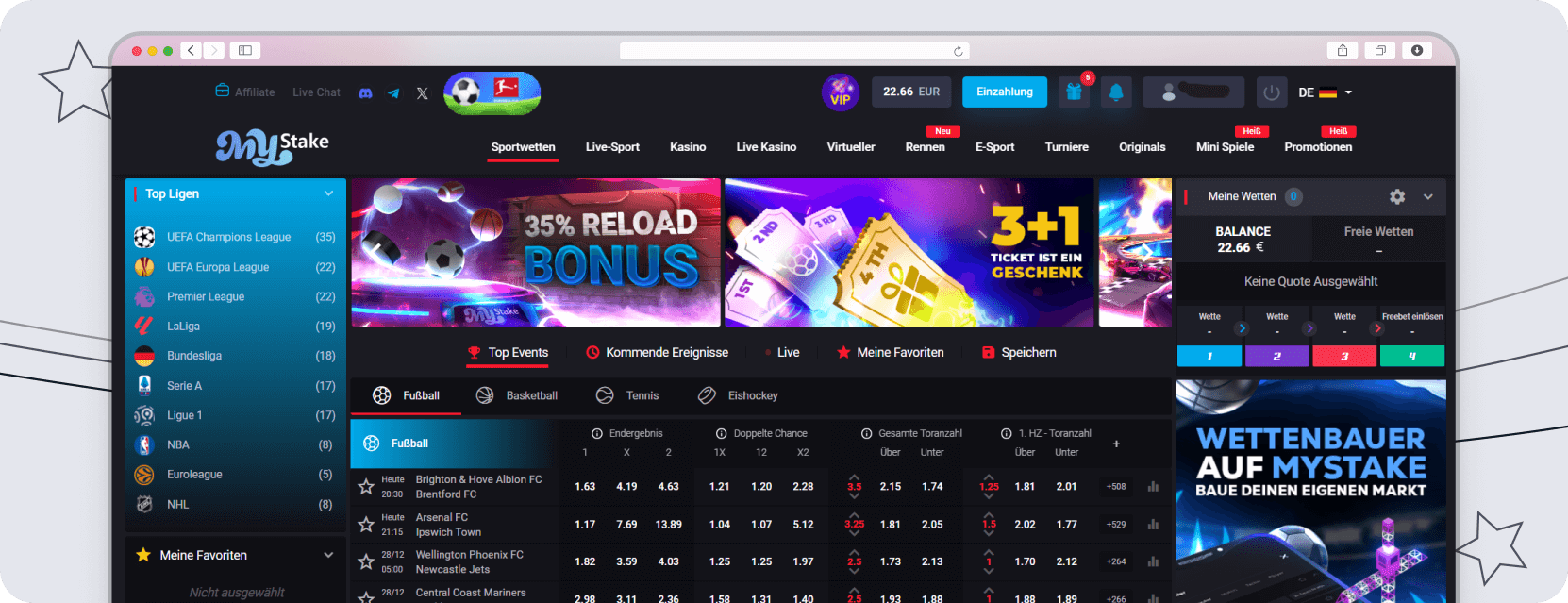
Mastering the Mystake App: Installation & Authentication
The Mystake app offers a tailored experience. The login process is identical, but the installation is critical.
- For Android: Download the APK file directly from the Mystake website. You must enable “Install from Unknown Sources” in your device settings before proceeding. The official app is not on the Google Play Store.
- For iOS: A web app (PWA) is typically used. Visit the site via Safari, tap the share button, and select “Add to Home Screen.” This creates an app-like icon that launches the optimized mobile site.
Persistent Login: The app may offer a “Remember Me” function. This stores an encrypted token on your device, not your actual password. For security, avoid this on shared devices.
Technical Specifications & Security Framework
| Parameter | Specification |
|---|---|
| License & Regulation | Curaçao eGaming (Master License 365/JAZ) |
| Login Security | SSL/TLS 1.2+ Encryption, Optional 2FA |
| Session Timeout | Approximately 15-20 minutes of inactivity |
| Password Policy | Minimum 8 chars, letters and numbers |
| Account Lock Threshold | Typically 5 consecutive failed attempts |
| Supported Platforms | Web (Chrome, Firefox, Safari), Android APK, iOS PWA |
Bonus Strategy & The Mathematics of Wagering
Successful login grants access to promotions, but understanding the math is key. A common welcome bonus might be “100% up to €500 + 100 Free Spins” with a 40x wagering requirement (WR).
Scenario Calculation: You deposit €200 and get a €200 bonus, making your total balance €400. The WR is 40 x (€200 bonus) = €8,000. If playing a slot with a 96% RTP, the expected loss through wagering is (1 – 0.96) * €8,000 = €320. This means the €400 balance is, on average, depleted before meeting the requirement. Strategy: Target high-RTP games (e.g., 97%+ table games if allowed) to reduce the expected loss. The Mystake app must clearly display bonus terms and remaining wagering.
Banking Integration & Login Verification
Withdrawal requests often trigger a secondary login verification. The system cross-references your login IP/device history with the withdrawal method. A mismatch (e.g., logging in from Country A but withdrawing to a bank in Country B) will flag for manual review. Always ensure your registered details (address, phone) are up-to-date to avoid payment login locks.
Advanced Troubleshooting: Scenario-Based Solutions
Scenario 1: “Invalid Password” after multiple correct attempts.
Likely Cause: Browser cache corruption or a temporary server-side session glitch.
Solution: 1) Clear browser cache/cookies completely. 2) Restart browser/router. 3) Attempt login via Incognito Mode. 4) Use the “Forgot Password” function as a last resort.
Scenario 2: Successful login but immediate redirection to the homepage or logout.
Likely Cause: Geolocation check failure mid-session or conflicting cookie.
Solution: Disable any VPN or proxy. Ensure your device’s location services are on if using the Mystake app. Try switching from Wi-Fi to mobile data to obtain a fresh IP address from your ISP.
Scenario 3: The “Sign In” button is unclickable (greyed out).
Likely Cause: Incomplete or invalid data in the input fields, or a JavaScript error.
Solution: Re-enter credentials manually (avoid autofill). Check for trailing spaces. Update your browser to the latest version.
Extended FAQ: Technical Deep Dive (10 Q&A)
Q1: I’m locked out of my account. What’s the step-by-step recovery process?
A1: Immediately use the “Forgot Password” link. Check your email (and spam folder) for the reset link. If you don’t receive it, your account may be under security review. Contact support via live chat with proof of identity (ID, recent deposit screenshot).
Q2: Does the Mystake app store my password?
A2: No. It stores a secure session token. Your password is hashed and stored on Mystake’s servers. The app only transmits it encrypted during the initial login.
Q3: Why am I asked for 2FA every time, even on the same device?
A3: This is a high-security setting. You can often adjust this in your account security preferences to “Trust this device for 30 days.”
Q4: Can I be logged in on the website and the app simultaneously?
A4: Usually, no. A new login from a second device will typically terminate the active session on the first device to prevent concurrent access.
Q5: What specific error codes should I report to support?
A5: Note any alphanumeric codes (e.g., ERR_CONNECTION_TIMEOUT, 403 Forbidden, 500 Internal Server Error). These are crucial for tech support to identify server, network, or account-specific issues.
Q6: How does the “Remember Me” function work technically?
A6: It places a persistent HTTP cookie on your device containing a unique, encrypted identifier. This token is validated by the server on subsequent visits, bypassing the need for credential re-entry.
Q7: Is my login activity logged?
A7: Yes. For security, Mystake logs IP addresses, device types, timestamps, and login success/failure. You can review recent sessions in your account settings.
Q8: I’m in a permitted country but get a geolocation error. Why?
A8: Your Internet Service Provider (ISP) might be routing traffic through a node in a different location. Contact your ISP or try using a different network (e.g., mobile hotspot).
Q9: What’s the difference between a “session expired” and “account locked” message?
A9: “Session expired” is automatic and requires a simple re-login. “Account locked” is a security action (e.g., too many failed attempts) and requires contacting customer support to unlock.
Q10: Can I change my login username?
A10: Generally, no. The username is a primary unique identifier in the database. You can usually change your registered email address and password, but the username is permanent after creation.
Mastering the Mystake login process is more than memorizing a password; it’s about understanding the technical ecosystem that protects your account. By following the protocols outlined in this guide—from pre-login checks and app management to interpreting error scenarios—you can ensure secure, reliable, and uninterrupted access. When in doubt, systematic troubleshooting (clear cache, check connection, verify location) resolves the majority of issues, keeping the focus where it belongs: on your gaming experience.